Introduction
You open Twitter, and your feed is flooded with breaking news. You switch to YouTube, and your favorite analyst is dropping a bombshell roster leak. It feels like you have to be in five places at once just to keep up. If you are a fan of competitive gaming, you know the struggle. Staying ahead of the curve is not just a hobby; it feels like a full-time job.
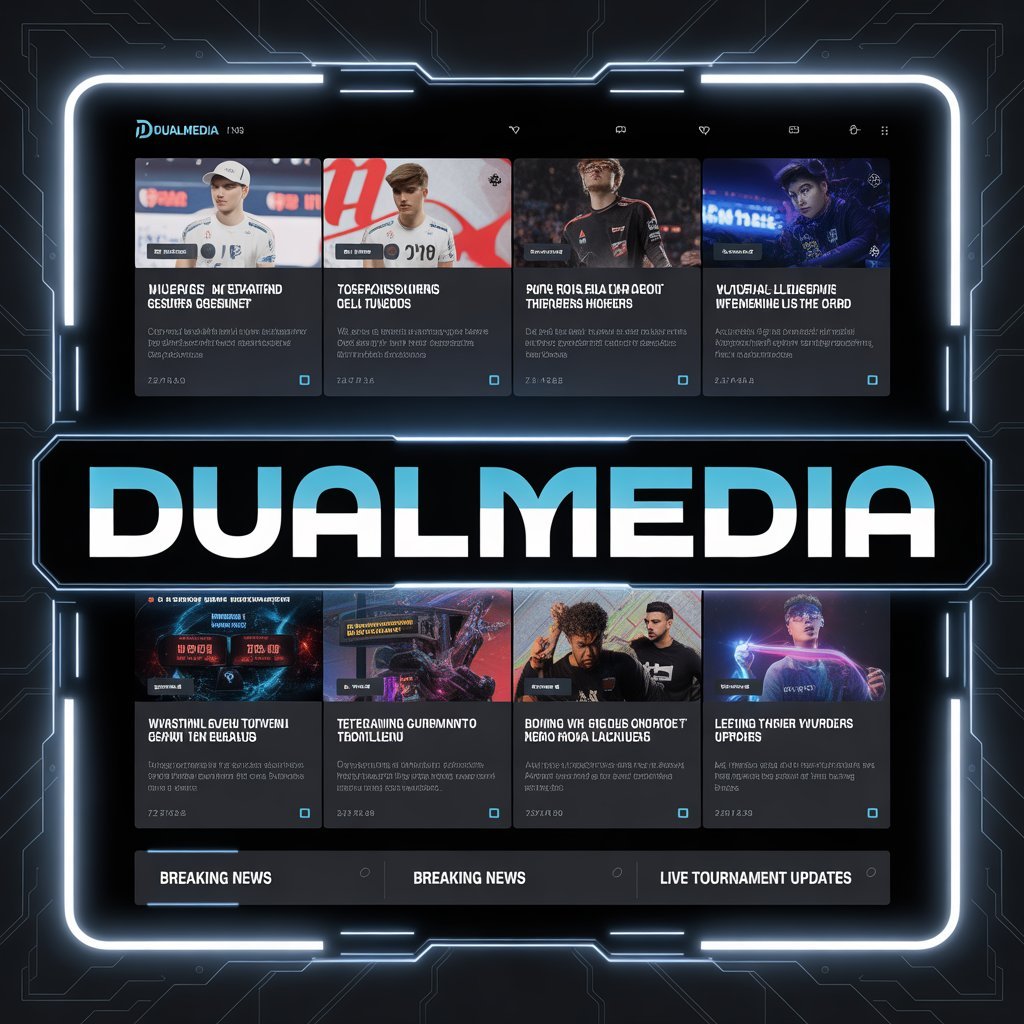
That is where the concept of esports news dualmedia comes into play. It is a term that is starting to float around the industry, but what does it actually mean for you, the viewer? In simple terms, it represents the merging of traditional journalism with the raw, unfiltered energy of content creators. It is about getting the facts while also getting the personality.
In this article, we are going to pull back the curtain. We will explore why this dual approach is taking over your feeds, how it affects the accuracy of the information you get, and why it might be the healthiest thing to happen to esports coverage. Whether you are here for the drama of the League of Legends off season or the strategic shifts in Valorant, let us break down how you consume news is changing forever.
The Fragmentation of Esports Coverage
Remember the old days? Ten years ago, if you wanted esports news, you went to a single website. You clicked on an article, read the words, and that was that. The relationship was one way. The journalist wrote, and you read.
Now, that model is nearly extinct. You do not just want the news. You want the reaction. You want to see a pro player’s immediate tweet after a loss. You want to watch a co streamer dissect a controversial call in real time. This fragmentation is why the esports news dualmedia model is gaining so much traction. It acknowledges that your attention is split, so the coverage needs to be split too.
There is a positive side to this. You get diversity of thought. You get to hear from former pros who understand the game on a molecular level. But there is a negative side as well. When everyone is a reporter, the lines between rumor and fact get blurry. You have to become a detective, sifting through hot takes to find the verified truth.
What Exactly Is Dualmedia?
Let us break this down because the term sounds like corporate jargon, but the reality is actually pretty simple. Dualmedia refers to the simultaneous use of two distinct media formats to deliver a single story.
Think of it like this. You have the written article. That is your source for the verified quotes, the historical context, and the official statements. Then, you have the video or the stream. That is where you get the emotional weight. It is where a host looks into a camera and says, “I cannot believe they did that,” and suddenly, the story feels real.
For a long time, these two worlds existed separately. They did not like each other. Traditional media thought streamers were too loud and unprofessional. Streamers thought traditional media was too slow and boring. The esports news dualmedia approach is the bridge. It brings the credibility of the pen and the passion of the microphone together.
Why This Shift Matters to You
You might be thinking, “Okay, but why should I care how the sausage is made?” You should care because it changes how you trust the information.
When you consume news through a dualmedia lens, you get a safety net. Imagine a major roster leak drops on a random Discord server. In the old days, a journalist would verify it with three sources and publish an article an hour later. Today, a creator might tweet the leak instantly. It is fast, but it might be wrong.
With a dualmedia model, you get the speed of the creator and the accountability of the journalist. You get the tweet that breaks the story, but you also get the follow up article that confirms it. You get the knee jerk reaction on YouTube, but you also get the analytical breakdown on a podcast two days later. It gives you the complete picture, which is something a single source rarely offers.
The Rise of the Creator Journalist
We are seeing a new type of personality emerge in the esports ecosystem. I call them the “Creator Journalists.” These are people who started as fans, became content creators, and have now accidentally stumbled into serious journalism.
Take someone like Jacob Wolf, or even personalities like Thorin or MonteCristo in their respective domains. They blur the line. They have the platform of a creator, with millions of followers, but they operate with the rigor of investigative reporters. When they speak, it carries the weight of a news article but the delivery of a show.
This is the heartbeat of esports news dualmedia. It is the recognition that trust is built on personality as much as it is on facts. You follow a specific reporter not just because they are accurate, but because you like their style. You trust them because you have watched them for years. That personal connection is something a faceless website cannot replicate.
The Speed Trap: Breaking News vs. Accurate News
Let us talk about the elephant in the room. Speed. In esports, being first is currency. If you break the news that a star player is leaving a team, you win the internet for the day.
But speed has a dark side. I have seen it happen too many times. A rumor starts on a forum. A content creator repeats it as “speculation.” Then, a news aggregator picks it up as “reported.” Within an hour, it is being treated as fact by the entire community. Then, the player has to come online and deny it, and the original creator looks bad.
In a healthy esports news dualmedia ecosystem, speed and accuracy have to coexist. The best in the business do not sacrifice one for the other. They use the “dual” part to their advantage. They might hint at a story on a stream (speed) but hold off on the final confirmation until the article is published (accuracy). It is a balancing act, and when it works, you get the best of both worlds.
How to Spot Reliable Sources
Since we are navigating this blended world, you need to know how to protect yourself from bad information. You cannot just trust anyone with a microphone. So, let me give you a few tips on how I vet sources when I am doomscrolling for esports news.
First, check the track record. Is this person consistently right, or do they delete their wrong tweets? If they are wrong often but loud, they are entertainment, not news. That is fine, as long as you know the difference.
Second, look for the primary source. If someone claims a player is benched, do they have a screenshot? Did the player like a tweet hinting at it? The best dualmedia coverage links to the evidence. If it is just a talking head saying, “Trust me bro,” be skeptical.
Finally, use multiple outlets. If the same story is being covered by a major publication and a popular creator independently, it is likely true. If only one person is screaming it into the void, it might just be a bid for attention.
The Business Side: Why Dualmedia Works
From a business perspective, the esports news dualmedia model is a no brainer. Esports organizations and sponsors are realizing that you cannot reach the audience with just a press release anymore. Nobody reads press releases.
To get your attention, brands have to be where you are. That means sponsoring the podcast, not just the website. It means giving exclusive interviews to streamers who have built a community, rather than traditional outlets with declining readership.
This has democratized access. When I first started following esports, the only people who got interviews were the big name reporters. Now, a dedicated creator with a modest but loyal following can land a scoop. It makes the industry feel more open. However, the negative side is that it can sometimes feel like an echo chamber, where only the loudest voices get heard, regardless of the quality of their reporting.
A Look at Different Titles
Not all esports are created equal, and the dualmedia approach manifests differently depending on the game.
-
League of Legends: This is the king of the co stream. The news often breaks during live streams. The community relies heavily on a mix of investigative journalists and former pros who stream their analysis. The off season is a prime example, where “leak season” becomes a content genre unto itself.
-
Counter Strike 2 (CS2): The CS scene is very forum driven. News often bubbles up from niche subreddits or European gossip sites before hitting the big English language outlets. Dualmedia here means translating the Eurocentric news for a global audience via video essays.
-
Valorant: Being newer, Valorant’s scene is heavily influenced by the personalities from other games. The coverage is fast, flashy, and deeply integrated with Twitch culture. If a pro sneezes, a clip goes viral within minutes.
-
Fighting Games (FGC): This community operates almost entirely on Twitter and personal streams. The dualmedia approach here is less about “reporting” and more about “communal witnessing.” Major announcements happen during live tournaments, and the news spreads via clips shared by community leaders.
The Role of Social Media Algorithms
We cannot talk about how you consume news without talking about the algorithm. Social media platforms dictate what you see. And what do they prioritize? Video.
This has forced even the most traditional text based outlets to adopt a dualmedia strategy. You might write a brilliant 3,000 word investigation, but if you do not make a 60 second TikTok summarizing it, nobody will see it. It is frustrating, but it is the reality.
The positive here is accessibility. Short form video has brought esports news to a much wider audience. People who would never click on a long article might watch a quick clip and become hooked. The negative is nuance. Complex stories involving contracts, legal disputes, or player mental health often get reduced to a clickbait headline and a sped up voiceover.
Challenges Facing the Industry
Despite the excitement, the esports news dualmedia model is facing some serious hurdles. Sustainability is a big one. Journalism costs money. Video production costs money. Right now, the esports industry is going through a financial correction. Sponsorships are drying up, and media layoffs are rampant.
When outlets shut down, the quality of coverage suffers. You lose the institutional knowledge. You lose the editors who double check facts. We are seeing a trend where more and more of the news burden is falling on independent creators who are working alone, without a safety net.
There is also the issue of burnout. Keeping up with the breakneck speed of esports is exhausting. When you are a one person show trying to do the work of a five person newsroom, the quality inevitably dips. As a fan, it is important to recognize this. The people bringing you the news are often overworked and underpaid.
Personal Insight: Finding My Balance
I will admit, there was a time when I was overwhelmed. I tried to follow every journalist, every creator, every player. My notifications were a nightmare. I felt like I was constantly missing something important.
That is when I realized I needed to curate my own esports news dualmedia experience. I stopped trying to follow everyone. Instead, I picked two trusted journalists for the hard news (the facts) and two entertaining creators for the commentary (the flavor).
It changed everything. I was no longer anxious about missing a tweet. I realized that the truly important stories would find me through my chosen sources. If you are feeling overwhelmed by the noise, I highly recommend you do the same. Pick your sources wisely. You do not need to be everywhere at once. You just need to be in the right places.
The Future of Esports News
So, where do we go from here? I believe the future is consolidation within the dualmedia space. We will likely see the rise of “super outlets” that do it all. Imagine a media company that is simultaneously a record label for creator content, a traditional news wire, and a tournament organizer.
We are also likely to see more interactivity. Imagine reading a news article where the quotes are hyperlinked to the exact timestamp of a livestream where the quote was said. Or imagine a podcast that releases a transcript with clickable sources. The line between reading and watching will continue to blur until it eventually disappears.
The successful players in this space will be the ones who remember the human element. At the end of the day, esports is about the players and the fans. The best coverage, whether it is a tweet, a video, or a long form article, treats the subject with respect and the audience with intelligence.
Frequently Asked Questions (FAQs)
1. What exactly is esports news dualmedia?
Esports news dualmedia refers to the strategy of delivering news through two complementary formats simultaneously, usually traditional written journalism combined with video or audio content like streams and podcasts. It aims to give you the factual depth of an article with the personality and immediacy of a creator.
2. Why is dualmedia becoming so popular in esports?
It is becoming popular because the esports audience is fragmented across platforms like Twitter, YouTube, and Twitch. Fans want both the verified facts from journalists and the emotional reactions from their favorite content creators. Dualmedia allows outlets to meet the audience where they already are.
3. How can I tell if an esports news source is reliable?
You should look for a track record of accuracy. Check if the source provides primary evidence (like screenshots or official statements) and if they correct their mistakes publicly. It is also wise to see if multiple reputable sources are reporting the same story before accepting it as fact.
4. Is video content replacing written esports journalism?
Not entirely, but it is changing it. Written journalism is still crucial for in depth investigations, contract analysis, and official records. However, video content is often better for breaking news, immediate reactions, and building a personal connection with the audience. They are increasingly being used together.
5. Who are some notable figures in the dualmedia space?
The space includes investigative journalists who use video platforms, such as Jacob Wolf, as well as analyst personalities like MonteCristo or Thorin who provide deep commentary. It also includes former pros like Caedrel, who blend high level game knowledge with breaking down news on stream.
6. How do co streams fit into esports news dualmedia?
Co streams are a massive part of the dualmedia landscape. When a major tournament happens, official broadcasts provide the primary footage, but co streamers provide the news analysis, commentary, and context in real time. They often break down controversial plays or roster rumors live, turning a match into a news event.
7. What are the risks of relying on creator led news?
The main risks are misinformation and bias. Creators may prioritize speed and entertainment over accuracy. They may also have personal friendships or rivalries with players that skew their reporting. It is important to consume creator led news with a critical eye and cross reference it with traditional sources.
8. How has the esports recession affected news coverage?
The esports recession has led to layoffs at many major media outlets. This has resulted in fewer resources for long form investigative journalism. It has also pushed more reporters to go independent, relying on platforms like Patreon and YouTube to fund their work, which shifts the focus more toward the “creator” side of dualmedia.
Conclusion
Navigating the world of esports coverage does not have to be a full time job. Understanding the esports news dualmedia model helps you see the matrix. You can see why a story breaks on Twitter, why it gets debated on a podcast, and why it finally gets verified in a written report three days later.
The takeaway here is that you have the power. You get to decide which voices you trust. You get to mix and match the text based journalism with the video commentary to create a feed that is informative, entertaining, and most importantly, accurate.
The industry is shifting, and while there are growing pains, the potential for a richer, more connected experience is huge. What is your go to source for esports news? Do you trust the written word more, or do you prefer to get your updates from video content? I would love to hear how you filter the noise.