Introduction
Have you ever held a coin that felt heavier than its weight in metal? Maybe you found an old penny in your change jar and wondered if it was worth more than a cent. That curiosity is exactly what draws people into the world of rare coins. And when you start searching online, you will quickly come across coyyn.com rare coins. Some collectors swear by this platform. Others warn you to stay far away. So which is it? A hidden treasure or a costly mistake?
In this article, we will walk through everything you need to know about coyyn.com rare coins. You will learn how to spot genuine deals, avoid common scams, and decide whether this marketplace fits your collecting style. We will share practical tips, red flags to watch for, and a few personal lessons from collectors who have been burned and those who have struck gold. By the end, you will feel confident making your next move, whether that means buying, selling, or simply walking away.
What Exactly Is Coyyn.com?
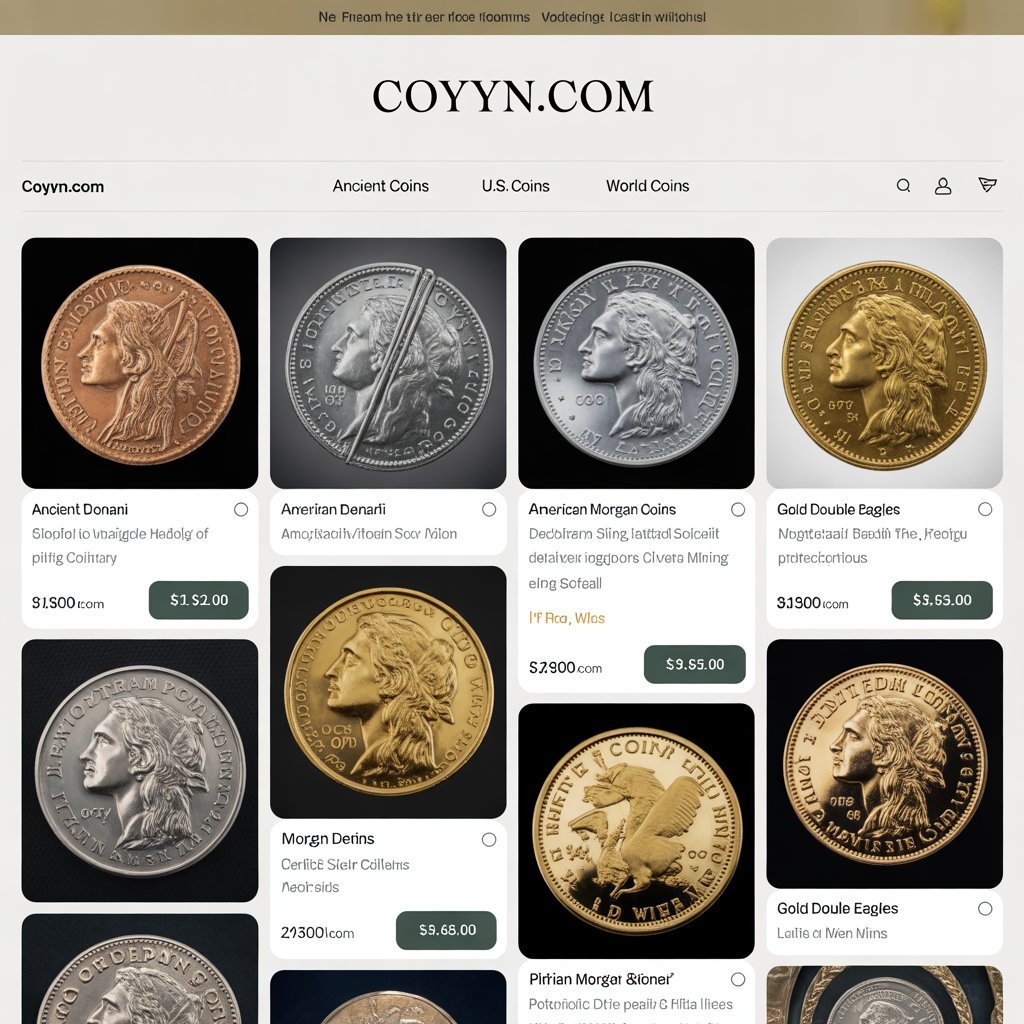
Before you hand over any money, you need to understand the platform itself. Coyyn.com is an online marketplace that focuses on rare coins, bullion, and collectible currency. It connects sellers with buyers from around the world. Think of it like eBay but specifically for coin enthusiasts. The site lists everything from ancient Roman denarii to modern proof sets. You will also find error coins, graded specimens, and even bulk lots for beginners.
However, here is where things get tricky. Unlike major auction houses such as Heritage Auctions or Stack’s Bowers, coyyn.com relies heavily on third party sellers. That means the platform itself does not authenticate or grade most items. They provide a space for transactions, but the responsibility for verifying a coin’s legitimacy falls on you. For experienced collectors, this is fine. You know how to check weights, measure diameters, and spot cast fakes. But for someone new, this openness can feel like walking through a minefield.
I once spoke with a collector named Mark who bought what he thought was a 1909 S VDB penny from a site similar to coyyn.com. The price was fair, not too good to be true. The photos looked sharp. But when the coin arrived, it stuck to a magnet. Real copper pennies from that era are not magnetic. Mark lost $800 and learned a hard lesson. That story is not meant to scare you. It is meant to prepare you.
Why Rare Coins Capture Our Imagination
There is something magical about holding a piece of history. A coin from the 1700s passed through hands that lived through revolutions. A gold double eagle survived the Great Depression. Each scratch tells a story. Unlike stocks or bonds, you can touch a rare coin. You can show it to friends. You can pass it down to your grandchildren.
Rare coins also offer financial upside. Over the past twenty years, top tier rare coins have outperformed the S&P 500 in several five year windows. According to the Professional Coin Grading Service (PCGS), the PCGS3000 Index which tracks high grade rare coins gained over 225% between 2002 and 2012. More recently, a 1794 Flowing Hair Silver Dollar sold for over $10 million. That is not a typo. Ten million dollars for one coin.
But here is the other side of that shiny coin. Most rare coins do not make you rich overnight. In fact, many lose value if you overpay or buy damaged pieces. The spread between wholesale and retail prices can be brutal. A dealer might pay you $500 for a coin you bought for $1,000. So while the upside is real, so is the risk. That brings us back to coyyn.com rare coins. Is this platform where dreams come true or where savings go to die?
How to Evaluate Coyyn.com Rare Coins Like a Pro
You do not need to be a numismatic expert to buy safely. You just need a system. Let us build one together.
Start with the Photos
Good sellers on coyyn.com post high resolution images from multiple angles. You should see both the obverse (front) and reverse (back). Look for close ups of the edge. Counterfeiters often mess up edge lettering or reeding. If the photos are blurry or only show one side, walk away. A legitimate seller has nothing to hide.
Also check the background. Professional sellers use neutral, consistent lighting. If you see fingers, messy tables, or odd shadows, that seller may be an amateur flipping coins without proper knowledge. That is not automatically bad, but it raises the risk.
Demand Third Party Grading
Here is a rule you should tattoo on your brain. Never buy an expensive raw coin from coyyn.com or any online marketplace unless you can inspect it in person first. Raw means ungraded by a professional service. The big three grading companies are PCGS, NGC, and ANACS. A slabbed coin from PCGS or NGC gives you a verified grade and authenticity guarantee.
Why does this matter? Because even experts get fooled. The Chinese counterfeit market produces astonishingly good fakes of key date coins. Some fakes pass the magnet test, the weight test, and even the ping test. But they fail under a microscope. A grading service uses high powered magnification and X ray fluorescence to detect metal composition mismatches. You cannot do that at your kitchen table.
So when you browse coyyn.com rare coins, filter for PCGS or NGC certified coins. Yes, you will pay more. But you also buy peace of mind.
Check Seller Feedback Religiously
Coyyn.com has a feedback system similar to other marketplaces. Do not ignore it. Read the negative comments first. Look for patterns. Do multiple buyers complain about slow shipping? Are there accusations of cleaned coins being sold as original surfaces? Does the seller argue with everyone who leaves a bad review?
One red flag is a seller with perfect feedback but only ten total reviews. That could be a brand new account. Another red flag is a seller who changes usernames frequently. Some scammers build a small positive history, then run a few high dollar scams, then disappear. Use common sense. If a deal feels wrong, it probably is.
Understand the Return Policy
Before you click buy, find the return policy. Most reputable sellers on coyyn.com offer at least a 14 day return window. Some offer 30 days. If a seller says “all sales final” or “no returns under any circumstances,” that is a massive warning sign. Even the best coin experts make mistakes. A fair seller stands behind their descriptions.
I personally never buy from a seller who refuses returns. Why would you? There are plenty of other listings. Patience protects your wallet.
The Hidden Costs of Collecting Rare Coins
Let us talk money, because nobody else will. When you buy coyyn.com rare coins, the sticker price is just the beginning. You also pay shipping, insurance, and sometimes a buyer’s premium. Insurance is critical. The USPS only covers up to $50 for coins unless you buy additional coverage. Private insurers like Collectibles Insurance Services offer better protection, but that is another monthly expense.
Then there is storage. You cannot leave a $5,000 gold coin in a shoebox under your bed. You need a safe, ideally a bolted down one. Better yet, a safe deposit box at a bank. That costs $50 to $200 per year depending on size. If you skip storage costs, you risk theft, fire, or flood.
Selling also costs money. Auction houses charge commissions from 10% to 20%. PayPal and credit card fees eat into your profit. Even if you sell privately, you may need to pay for shipping and insurance again. So when you calculate potential returns, subtract all these layers. A coin that doubles in price over ten years might only give you a 5% annual return after fees. That is fine, but it is not life changing.
Common Scams on Coyyn.com and How to Dodge Them
Scammers love coin collectors because coins are small, valuable, and hard for police to trace. Here are the most common tricks you will see on coyyn.com rare coins listings.
The Overgraded Coin
A seller lists a coin as “AU 55” (About Uncirculated). But the photos show wear on the high points. You check the PCGS Photograde app and realize the coin is actually VF 30 (Very Fine). The seller hopes you trust their amateur opinion. Always verify grades yourself. If you cannot tell, buy only slabbed coins.
The Cleaned Coin
Cleaning destroys a coin’s original surface and slashes its value by 50% or more. But cleaned coins sometimes look shiny and attractive to new collectors. Look for hairlines (tiny scratches from rubbing) or unnatural brightness around letters. A genuine uncleaned coin has a consistent, mellow luster.
The Wrong Planchet
Some fakes use the correct metal but the wrong planchet (blank coin disc). For example, a 1943 copper penny is extremely rare. Most 1943 pennies are steel. Scammers take a copper planchet from a different year and stamp a 1943 date on it. Under a loupe, you might see tool marks or font mismatches. This is why certification matters.
The Shadow Seller
A seller with zero feedback lists twenty rare coins at prices 30% below market value. They demand payment via wire transfer or cryptocurrency. You send money. They disappear. Coyyn.com has buyer protection, but it does not cover wire transfers or crypto. Stick to credit cards or PayPal Goods and Services. Those give you chargeback rights.
When Coyyn.com Rare Coins Are a Good Idea
Let us be fair. Not everything on coyyn.com is a trap. For certain types of collectors, this platform makes perfect sense.
First, if you collect modern bullion coins like American Eagles or Canadian Maple Leafs, the risk of fakes is lower. These coins are widely available and well documented. You can buy them on coyyn.com from established bullion dealers with thousands of positive feedbacks.
Second, if you collect low value coins under $50, the incentive to fake them is small. A counterfeit 1960 Roosevelt dime costs more to produce than the dime is worth. So cheap coins are generally safe. You can learn a lot by buying inexpensive lots, practicing your grading skills, and building your reference collection.
Third, if you are a seller, coyyn.com offers a large audience. You can list your duplicates or unwanted pieces without paying the high fees of major auction houses. Just price fairly, take great photos, and ship quickly. Good sellers build repeat customers.
I know a dealer named Lisa who started on coyyn.com with just $500. She bought small lots, cleaned nothing, took honest photos, and built a reputation. Within two years, she was moving $10,000 per month. She never had a single scam complaint because she treated every buyer the way she wanted to be treated. So the platform works. But it works for careful, honest people.
How to Spot a Fair Price on Coyyn.com
Pricing rare coins is part science, part art. Here is a simple method you can use.
Step one: Search for the same coin on eBay but filter by “sold listings.” That shows you what real people actually paid, not what sellers hope to get.
Step two: Check the PCGS or NGC price guides. These give you estimated values for different grades. Be aware that these guides often run high. Think of them as suggested retail, not gospel.
Step three: Look at recent auction results from Heritage or GreatCollections. Those are actual hammer prices from competitive bidding.
Step four: Compare three to five similar listings on coyyn.com. If all are around $100 and one is $60, ask why. Maybe the cheap one has damage. Maybe the expensive one is overpriced. Either way, you have context.
Never fall for “limited time” pressure. Rare coins do not expire. If you miss one deal, another will appear next week. Patience is your superpower.
The Emotional Side of Collecting
We have talked a lot about money. But let us be real for a moment. Most people do not collect rare coins just for profit. They collect because it is fun. There is joy in the hunt, satisfaction in completing a set, and pride in owning a small piece of history.
That emotional connection can also cloud your judgment. You fall in love with a coin. You ignore the hairline scratch. You convince yourself the price is fair. Then six months later, you try to sell and discover you overpaid by 40%. That hurts.
My advice? Separate your collecting budget from your investing budget. Set aside money for coins you simply want to own. Do not expect those to make you rich. For investing, stick to liquid, certified, widely collected coins like common date Saint Gaudens double eagles or Morgan dollars in MS64. Those will always find buyers.
When you browse coyyn.com rare coins, ask yourself a simple question before every click. “Am I buying this because I love it, or because I think it is a steal?” Both answers are fine. Just be honest with yourself.
A Step by Step Safe Buying Checklist
Let us make this practical. Print this list or save it on your phone. Use it for every purchase on coyyn.com.
-
Is the coin certified by PCGS, NGC, or ANACS? If no, proceed only if the price is under $100.
-
Do the photos show both sides and the edge clearly? If no, request better photos before bidding.
-
Does the seller have at least 50 positive feedbacks with no recent negatives? If no, start with a small test purchase.
-
Is the return policy at least 14 days? If no, move to another listing.
-
Does the price match recently sold eBay listings? If no, walk away unless the coin is very rare.
-
Am I paying with a credit card or PayPal Goods and Services? If no, reconsider the payment method.
-
Have I factored in shipping, insurance, and potential storage costs? If no, recalculate your budget.
Follow this checklist every single time. It takes two minutes and saves thousands of dollars.
Real Stories from Real Collectors
You might appreciate hearing from people who have been there. A reader named David shared this: “I bought a 1916 D mercury dime from coyyn.com for $900. The seller had great photos and a 30 day return policy. When it arrived, I sent it to NGC for crossover grading. It came back ‘Authentic, Details Cleaned.’ I returned it the same day. The seller refunded me fully. I lost only the shipping cost. That return policy saved me.”
Another collector, Rachel, was not so lucky. “I saw a raw 1877 Indian Head penny listed for $1,200. Market value was around $2,000. I thought I found a bargain. The seller said no returns but had 100% feedback. I paid via bank wire. The coin was a counterfeit. The seller disappeared. Coyyn.com support said they could not help because I used a wire transfer. I felt so stupid.”
Notice the pattern. The safe buyer used credit cards and return policies. The victim broke both rules. You get to choose which story sounds like you.
Frequently Asked Questions
1. Is coyyn.com rare coins a legitimate website?
Yes, coyyn.com is a legitimate online marketplace. However, legitimacy does not guarantee every seller is honest. You must vet each seller individually and use secure payment methods.
2. How can I tell if a rare coin on coyyn.com is fake?
Look for PCGS or NGC certification. For raw coins, check weight, diameter, edge details, and magnet response. Use a 10x loupe to inspect for casting seams or unnatural luster.
3. What payment method is safest for buying coins online?
Credit cards and PayPal Goods and Services offer buyer protection. Avoid wire transfers, cryptocurrency, cash, or peer to peer apps like Venmo. Those give you no recourse if scammed.
4. Can I return a coin if I change my mind?
Only if the seller offers a return policy. Always check the listing details before buying. Many reputable sellers offer 14 to 30 day returns. “All sales final” listings are much riskier.
5. Are ungraded coins on coyyn.com ever worth buying?
Yes, but only for low value coins under $100 or from sellers you trust completely. For expensive or key date coins, always buy third party graded examples.
6. How much does coin grading cost if I want to certify a raw coin?
PCGS and NGC charge around $20 to $40 per coin plus shipping and membership fees. Economy tiers take several months. Express services cost more but return faster.
7. What are the most commonly faked coins on coyyn.com?
Key date Lincoln cents (1909 S VDB, 1914 D, 1922 no D), rare silver dollars (1893 S, 1889 CC), and gold coins like the 1907 Saint Gaudens double eagle.
8. Does coyyn.com offer an authentication guarantee?
No. The platform is a marketplace, not a grading service. They do not inspect or guarantee any coin listed. That responsibility falls entirely on you as the buyer.
Conclusion
So where does that leave us with coyyn.com rare coins? The honest answer is that it is neither a guaranteed treasure chest nor an automatic scam. It is a tool. Like any tool, its value depends on how you use it. If you educate yourself, verify everything, and protect your payments, you can find genuine deals and build a collection you love. If you rush, ignore red flags, and chase bargains that seem too good to be true, you will likely get burned.
Start small. Buy one or two inexpensive certified coins. Learn the platform. Build relationships with trusted sellers. And never invest money you cannot afford to lose. Rare coin collecting should bring you joy, not sleepless nights.
Now I would love to hear from you. Have you bought rare coins online before? What was your best find or worst miss? Drop your story in the comments below. And if you found this guide helpful, share it with a fellow collector who might need a friendly warning.